I.T. Happens, Downtime Doesn’t Have To: How an MSP Can Keep Your Business Running
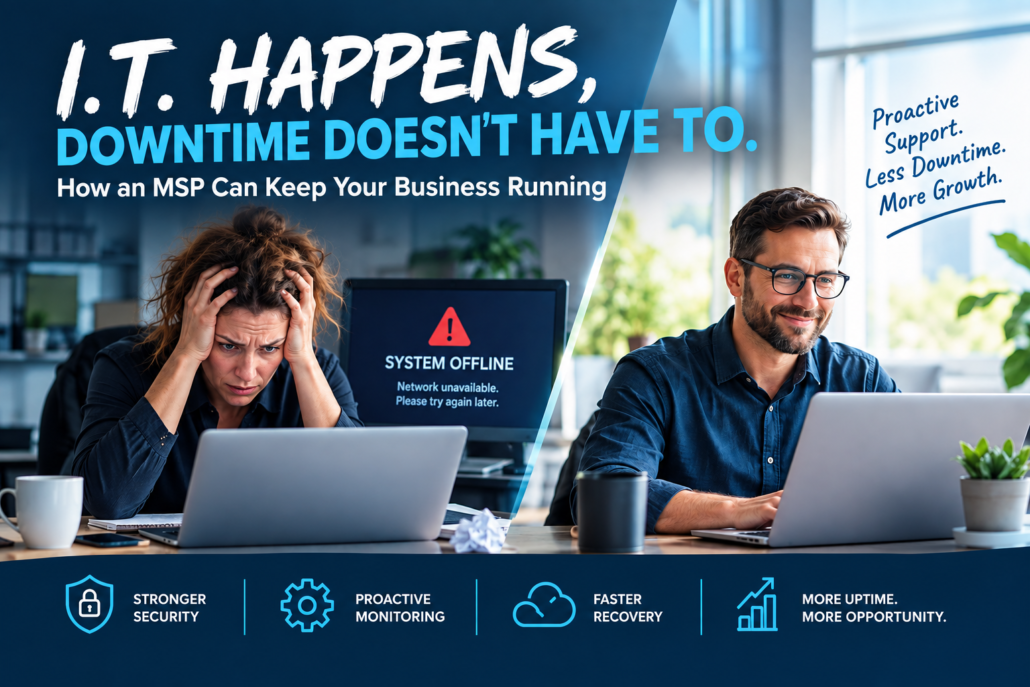
I.T. Happens, Downtime Doesn’t Have To: How an MSP Can Keep Your Business Running
Technology problems are a fact of doing business. Computers freeze. Internet connections go down. Servers fail. Software stops working. Employees accidentally click the wrong link. I.T. Happens, Downtime Doesn’t Have To.
The difference between a minor technology issue and a major business disruption often comes down to how quickly the problem is identified, addressed, and prevented from happening again. That is where a managed service provider (MSP) can make a significant difference.
Instead of waiting for something to break, an MSP takes a proactive approach to monitoring, maintaining, securing, and supporting your technology. The goal isn’t simply to fix problems. It’s to reduce the number of problems your business experiences in the first place.
I.T. Happens, Downtime Doesn’t Have To
Every business experiences technology problems eventually. The question is what happens when they occur.
If your employees have to stop working while someone tries to figure out what went wrong, the cost of downtime can quickly add up. Employees may be unable to access files, communicate with customers, process orders, answer phones, or perform the work you’re paying them to do.
An MSP works to identify potential problems before they become major disruptions.
Through proactive monitoring and maintenance, an MSP can keep an eye on important systems and identify issues that may otherwise go unnoticed until they cause an outage.
That means I.T. Happens, Downtime Doesn’t Have To becomes more than just a catchy phrase. It becomes a philosophy for managing your business technology.
The Problem With Waiting for Something to Break
Traditional break-fix IT follows a simple model:
Something breaks.
You call someone.
They diagnose the problem.
They fix it.
You pay for the repair.
While that may sound straightforward, there is one major problem: your employees are often dealing with the downtime while everyone is waiting for the problem to be resolved.
A slow server might eventually fail.
A failing hard drive might eventually stop working.
An outdated application might eventually create compatibility problems.
A security vulnerability might eventually be exploited.
Waiting until something breaks means your IT provider is always reacting to problems that have already affected your business.
An MSP takes a different approach.
How an MSP Helps Reduce System Downtime
One of the biggest benefits of working with an MSP is proactive IT management.
Instead of simply responding when employees report a problem, an MSP can continuously monitor your technology environment and address issues before they become significant disruptions.
Research from IBM and IDC supports the value of proactive and preventive IT support. In a 2022 IDC survey cited by IBM, organizations using proactive and preventive technologies reported preventing an average of 71 hours of downtime per year across the systems measured.
1. Proactive Monitoring
Modern businesses depend on a large number of technology systems.
Servers, computers, networks, internet connections, cloud applications, backups, security tools, and other systems all have to work together.
An MSP can monitor these systems for warning signs and unusual activity.
That can help identify potential problems before employees notice them.
For example, a system showing declining performance may be investigated before it becomes a complete failure.
2. Regular Maintenance
Technology needs maintenance just like other business equipment.
Operating systems need updates. Applications need patches. Hardware needs attention. Security tools need to remain current.
Regular maintenance helps reduce the likelihood that outdated technology will create avoidable problems.
An MSP can establish processes for handling these routine tasks so they don’t get forgotten when everyone is busy running the business.
3. Faster Response When Problems Occur
Even with proactive management, technology problems will occasionally happen.
When they do, response time matters.
An MSP provides an established support process for identifying and addressing technology issues. Instead of an employee spending hours trying to figure out why something isn’t working, they have a dedicated resource to contact.
The faster a problem can be diagnosed and resolved, the less time your employees spend waiting.
4. Backup and Disaster Recovery
Some downtime isn’t caused by a simple computer problem.
Hardware failures, cyberattacks, accidental deletions, and other incidents can potentially make critical business information unavailable.
A properly designed backup and disaster recovery strategy can help your business recover when something goes wrong.
An MSP can help determine what needs to be backed up, how frequently backups should occur, where they should be stored, and how your business would recover if a major incident occurred.
Backups aren’t simply about having another copy of your files. They’re about having a plan for getting your business back to work.
5. Cybersecurity
Cybersecurity is another important part of reducing downtime.
A successful cyberattack can potentially prevent employees from accessing systems and data they need to do their jobs.
An MSP can help businesses implement layers of protection such as multifactor authentication, endpoint security, patch management, email security, access controls, monitoring, and employee security awareness.
No security strategy can eliminate every risk, but proactive security management can help reduce the likelihood and potential impact of an incident.
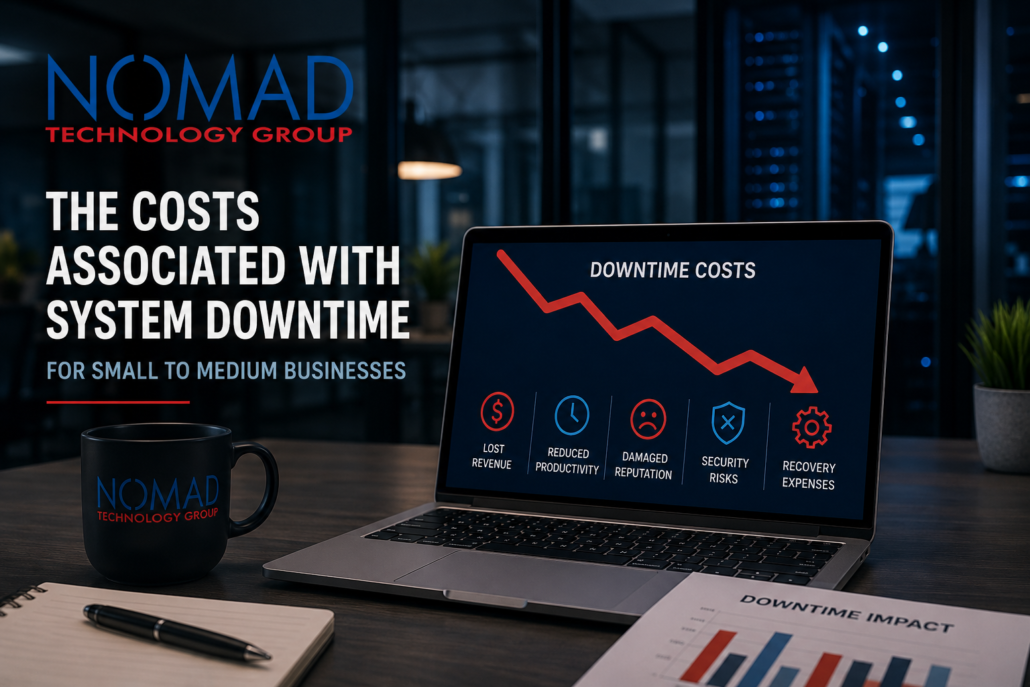
Downtime Costs More Than You Think
When a system goes down, the cost isn’t limited to the IT repair bill.
Consider what happens when your employees can’t work.
If ten employees are unable to work for two hours, that’s twenty hours of lost productivity.
But the impact can go beyond employee productivity.
You may also have:
- Missed customer calls
- Delayed orders
- Missed appointments
- Delayed projects
- Frustrated customers
- Overtime costs
- Lost sales opportunities
- Damage to your customer experience
The longer a problem lasts, the greater the potential impact.
That is why reducing downtime isn’t simply an IT objective. It’s a business objective.
An MSP Helps Your Business Be Proactive Instead of Reactive
One of the biggest differences between an MSP and traditional break-fix support is the mindset.
Break-fix asks:
“What broke?”
Proactive IT asks:
“What could break, and what can we do about it before it happens?”
That change in perspective can have a meaningful impact on your business.
Instead of constantly reacting to technology emergencies, your IT provider can focus on maintaining reliable systems, identifying risks, planning improvements, and aligning technology with your business goals.
I.T. Happens, Downtime Doesn’t Have To
Technology will never be perfect.
There will always be unexpected problems.
The goal isn’t to promise that your business will never experience an outage. No responsible IT provider can make that guarantee.
The goal is to reduce unnecessary downtime, identify problems earlier, respond quickly when something goes wrong, and have a plan for recovering when serious problems occur.
That’s what proactive IT management is about.
I.T. Happens, Downtime Doesn’t Have To.
Your business shouldn’t have to wait for technology to fail before someone starts paying attention to it.
Is Your IT Provider Actually Reducing Downtime?
If you’re evaluating your current IT support, don’t just ask how quickly they fix problems.
Ask different questions:
- Are they proactively monitoring our systems?
- Are they identifying potential problems before they cause downtime?
- Are our backups being tested?
- Do we have a documented disaster recovery plan?
- Are our systems being regularly patched and maintained?
- Are security risks being monitored?
- How quickly can someone respond when a critical system goes down?
- Is our technology strategy aligned with our business goals?
The answers can tell you a lot about whether your IT provider is simply responding to problems or actively helping you prevent them.
At Nomad Technology Group, we believe technology should support your business—not constantly get in the way of it.
I.T. Happens, Downtime Doesn’t Have To.
If your business needs proactive managed IT support, cybersecurity, backup and disaster recovery, or help reducing technology downtime, reach out directly to Nomad Technology Group for more information or to discuss your MSP needs.
Outbound source for the article: IBM’s report, based on IDC’s Cost of Downtime and Importance of Support Survey, reports that organizations using proactive and preventive technologies estimated preventing an average of 71 hours of downtime per year across measured systems. (ibm.com)
IBM — The Cost of Downtime in Datacenter Environments
Nomad internal CTA:
Contact Nomad Technology Group for MSP Services


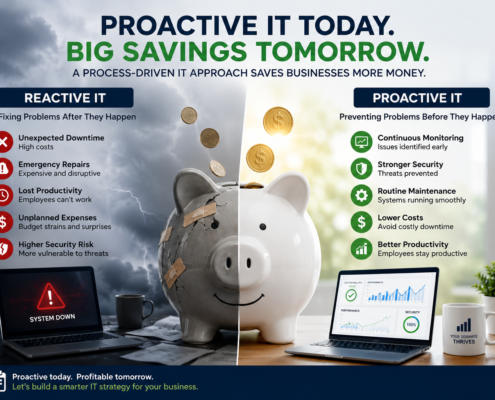

 How MSPs Save Small Business Owners Money