
Why Processes Matter in IT: The Key to Reliable and Secure Business Technology
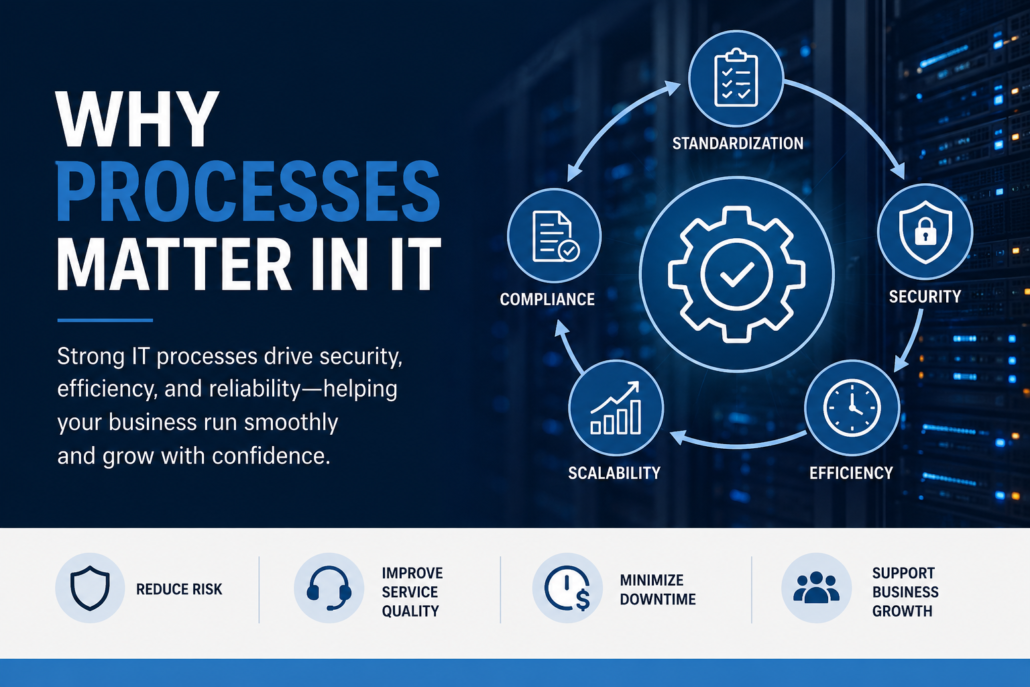
Why Processes Matter in IT
In today’s technology-driven business environment, success depends on more than just having the right hardware and software. Organizations need consistency, accountability, and efficiency to keep their systems running smoothly. That is why understanding Why Processes Matter is essential for businesses of every size.
Whether managing cybersecurity, user support, cloud infrastructure, or disaster recovery, well-defined IT processes create a foundation for predictable outcomes and long-term success. Without documented procedures, organizations often experience increased downtime, security vulnerabilities, and operational inefficiencies.
What Are IT Processes?
IT processes are documented procedures that guide how technology-related tasks are performed within an organization. These processes provide step-by-step instructions for activities such as:
- User onboarding and offboarding
- Password management
- Software deployment
- Backup and disaster recovery
- Security incident response
- Change management
- Help desk ticket resolution
By creating standardized workflows, businesses can ensure that tasks are completed consistently regardless of who performs them.
Why Processes Matter in IT for Business Success
One of the primary reasons Why Processes Matter in IT is because they eliminate guesswork. When employees follow documented procedures, organizations reduce errors and improve service quality.
Structured IT frameworks such as ITIL have been widely adopted because they help organizations align technology services with business goals, improve efficiency, reduce costs, and better manage risk. According to ITIL best practices, standardized processes help organizations proactively manage technology services while improving reliability and customer satisfaction. Source: BMC ITIL Processes Overview.
Businesses that rely on informal or undocumented methods often find themselves dependent on individual employees’ knowledge. When those employees leave, critical operational knowledge can leave with them.
Improved Cybersecurity Through Standardized Processes
Cybersecurity is one area where processes are absolutely critical. Many successful cyberattacks occur because organizations fail to follow consistent security procedures.
Examples of security-focused IT processes include:
- Multi-factor authentication implementation
- Regular vulnerability assessments
- Patch management schedules
- Security awareness training
- Incident response planning
- Access control reviews
When these procedures are documented and followed consistently, businesses significantly reduce their exposure to cyber threats.
A well-defined incident response process also enables organizations to react quickly when security events occur, minimizing potential damage and recovery costs.
Reduced Downtime and Faster Problem Resolution
Downtime is expensive. Every minute employees cannot access critical systems can result in lost productivity, missed opportunities, and frustrated customers.
Organizations with documented IT processes can:
- Identify issues faster
- Escalate problems appropriately
- Resolve incidents consistently
- Prevent recurring issues
Frameworks such as IT Service Management (ITSM) emphasize structured processes because they improve efficiency, visibility, and service reliability while reducing disruptions to business operations.
When technicians follow repeatable procedures, troubleshooting becomes more efficient and less dependent on individual experience.
Better Compliance and Risk Management
Many industries face strict regulatory requirements regarding data protection, privacy, and operational controls. Documented IT processes help organizations demonstrate compliance during audits and assessments.
Examples include:
- Data retention policies
- Backup verification procedures
- User access reviews
- Change management documentation
- Security monitoring practices
Maintaining documented processes creates accountability and provides evidence that required controls are being followed consistently.
Supporting Business Growth
As businesses grow, technology environments become increasingly complex. Processes that worked for a company with ten employees often become inadequate when the organization reaches fifty, one hundred, or more users.
Standardized IT processes help businesses scale by:
- Improving employee onboarding
- Reducing training time
- Increasing operational consistency
- Supporting predictable service delivery
- Maintaining quality as workloads increase
Without scalable processes, growth often leads to confusion, inefficiency, and increased operational risk.
Building a Culture of Continuous Improvement
Another reason Why Processes Matter in IT is that they create opportunities for continuous improvement. Once a process is documented, organizations can measure its effectiveness, identify bottlenecks, and make improvements over time.
Effective IT organizations regularly review processes to determine:
- What’s working well
- Where delays occur
- Which tasks can be automated
- How user experiences can be improved
This cycle of measurement and improvement helps businesses stay competitive while maximizing the value of their technology investments.
Final Thoughts
Understanding Why Processes Matter in IT is essential for any business that relies on technology to operate effectively. Well-documented procedures improve security, reduce downtime, support compliance, and create a scalable foundation for growth.
Technology alone cannot guarantee success. The processes behind the technology often determine whether systems remain reliable, secure, and aligned with business objectives. Organizations that invest in developing and maintaining strong IT processes position themselves for greater operational efficiency, reduced risk, and long-term success.
For organizations looking to strengthen their IT operations, standardized processes are not just best practices—they are business necessities.
To request a free consultation or for additional information, visit us at: Nomad Technology Group