
How Your IT Company Should Be Handling the Risks of Zero-Day Cyberattacks
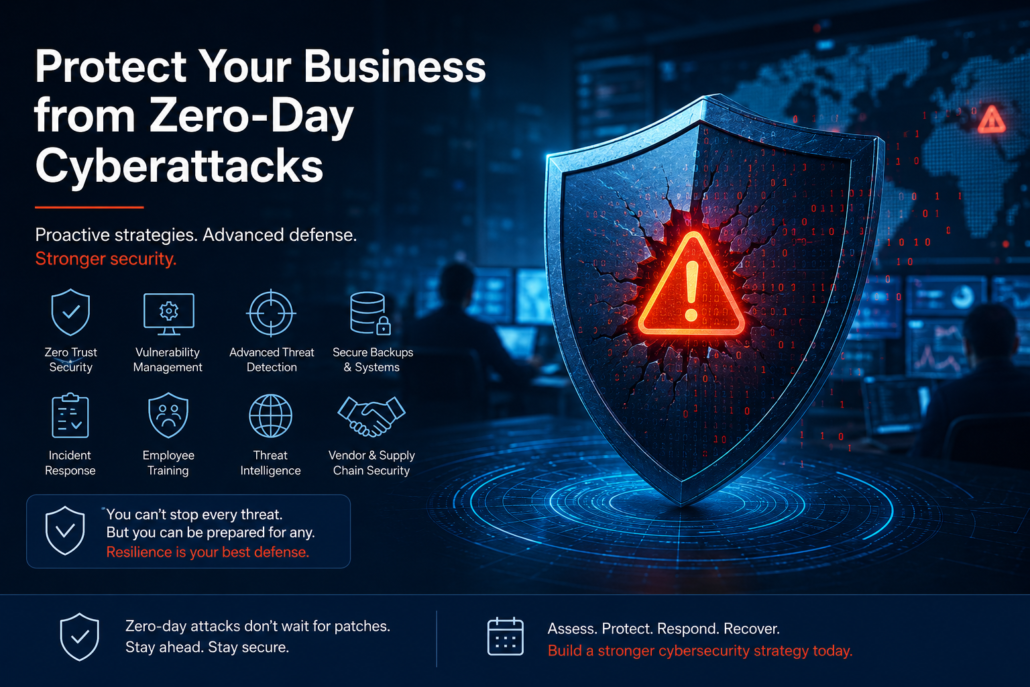
How Your IT Company Should Be Handling the Risks of Zero-Day Cyberattacks
Zero-day cyberattacks are among the most dangerous cybersecurity threats facing businesses today. Because these attacks exploit unknown software vulnerabilities before patches are available, organizations often have little or no warning before systems become compromised.
For IT companies, managed service providers (MSPs), and internal IT departments, the stakes are especially high. A single successful zero-day exploit can lead to ransomware deployment, data theft, operational downtime, and widespread client impact.
To protect modern business environments, IT companies must adopt a proactive cybersecurity strategy focused on resilience, rapid detection, and layered defense.
What Are Zero-Day Cyberattacks?
A zero-day cyberattack occurs when hackers exploit a previously unknown vulnerability in software, hardware, or firmware before the vendor releases a security patch.
These attacks are particularly dangerous because:
- Traditional antivirus tools may not recognize the threat
- Security teams often lack indicators of compromise
- Attackers can move quickly before defenses are updated
- Exploits frequently target mission-critical systems
According to the U.S. Cybersecurity and Infrastructure Security Agency (CISA), organizations should prioritize actively exploited vulnerabilities using resources like the Known Exploited Vulnerabilities (KEV) catalog. (CISA)
1. Adopt a Zero Trust Security Model
A Zero Trust framework assumes that no user, device, or application should be trusted automatically.
Key Zero Trust controls include:
- Multi-factor authentication (MFA)
- Least-privilege access
- Network segmentation
- Device verification
- Conditional access policies
If attackers successfully exploit a zero-day vulnerability, Zero Trust security helps limit lateral movement and reduce damage.
2. Strengthen Vulnerability and Patch Management
Although zero-day vulnerabilities begin as unknown threats, attackers often continue exploiting systems long after patches become available.
Strong patch management should include:
- Automated patch deployment
- Continuous vulnerability scanning
- Asset inventory tracking
- Emergency patch procedures
- Third-party application monitoring
CISA regularly issues alerts urging organizations to prioritize remediation of actively exploited vulnerabilities. (CISA)
3. Implement Advanced Endpoint Detection and Response (EDR)
Legacy antivirus software alone is no longer enough to stop sophisticated cyberattacks.
Modern EDR and XDR solutions use behavioral analytics and threat intelligence to identify suspicious activity such as:
- Credential theft attempts
- Privilege escalation
- Unusual PowerShell activity
- Unauthorized remote access
- Lateral movement behavior
Behavior-based monitoring is critical because many zero-day attacks bypass traditional signature-based defenses.
4. Segment Critical Systems and Backups
Flat networks make it easier for attackers to spread once they gain access.
IT companies should isolate:
- Backup infrastructure
- Domain controllers
- Administrative systems
- Production environments
- Sensitive client data
Immutable and offline backups are especially important because ransomware groups increasingly target backup systems first.
5. Build and Test an Incident Response Plan
A documented cybersecurity plan is only effective if teams practice using it.
Every IT company should maintain an incident response strategy that includes:
- Escalation procedures
- Internal communication workflows
- Client notification processes
- Recovery procedures
- Containment protocols
Tabletop exercises and breach simulations help organizations respond faster during real-world attacks.
6. Monitor Threat Intelligence Continuously
Cyber threats evolve rapidly, making threat intelligence a critical component of cybersecurity operations.
Organizations should monitor:
- CISA advisories
- Vendor security bulletins
- Threat intelligence feeds
- Dark web exposure alerts
- Emerging exploit trends
Recent CISA alerts have highlighted active exploitation of zero-day vulnerabilities targeting enterprise networking equipment and operating systems. (CISA)
7. Train Employees to Recognize Cyber Threats
Human error remains one of the largest cybersecurity risks.
Security awareness training should teach employees how to identify:
- Phishing emails
- Social engineering attacks
- Credential theft attempts
- Suspicious downloads
- Unsafe remote access practices
Employees often serve as the first line of defense against cyberattacks.
8. Evaluate Vendor and Supply Chain Security
Third-party vendors and software providers can introduce hidden vulnerabilities into your environment.
IT companies should:
- Audit vendor security practices
- Limit third-party access permissions
- Require MFA for vendors
- Review software dependencies
- Monitor supply-chain risks continuously
Supply-chain attacks have become increasingly common in modern cybersecurity incidents.
Cyber Resilience Is the New Standard
No organization can guarantee complete protection from zero-day cyberattacks. The goal is not perfection — it is resilience.
Organizations that invest in layered cybersecurity defenses, continuous monitoring, rapid response procedures, and employee awareness are far more likely to minimize operational disruption and recover quickly after an attack.
Cybersecurity is no longer just an IT issue. It is a business continuity issue that directly affects customer trust, operational stability, and long-term growth.
Final Thoughts
Zero-day cyberattacks are becoming more sophisticated, more targeted, and more damaging every year. IT companies that take a proactive approach to cybersecurity will be far better prepared to protect their clients, systems, and reputation.
By implementing Zero Trust security, advanced threat detection, rapid patch management, incident response planning, and ongoing employee training, organizations can significantly reduce the impact of emerging cyber threats.
To learn more about strengthening your organization’s cybersecurity strategy, visit Nomad Technology Group to request additional information.