Most Common Cyberattacks in Nashville Businesses: What Local Companies Need to Know
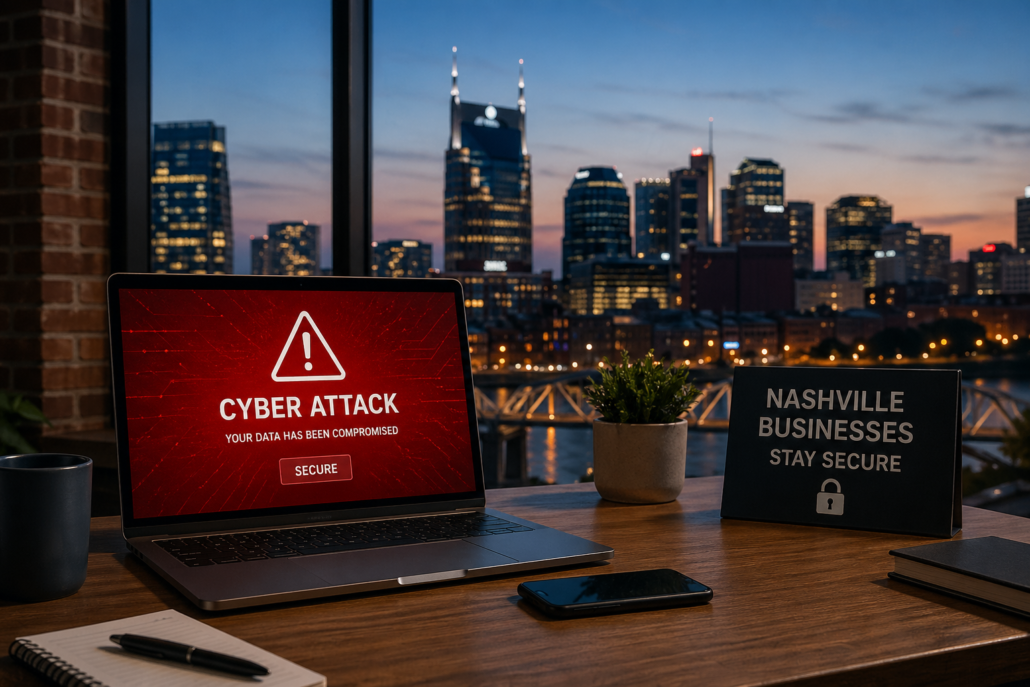
Most Common Cyberattacks in Nashville Businesses: What Local Companies Need to Know
Key Phrase: Most Common Cyberattacks in Nashville Businesses
The most common cyberattacks in Nashville businesses continue to evolve as cybercriminals target organizations of all sizes across Middle Tennessee. Whether you run a healthcare office, construction company, law firm, or retail operation, understanding the risks is essential. Nashville’s growing business ecosystem makes it an attractive target for hackers seeking financial gain, sensitive data, and operational disruption. Therefore, businesses must remain proactive in identifying vulnerabilities and strengthening cybersecurity defenses.
Why Cybercrime Is Increasing in Nashville
Nashville has become one of the fastest-growing business hubs in the Southeast. As a result, local companies often store large volumes of customer information, payment data, and intellectual property. Unfortunately, cybercriminals view these assets as opportunities.
Additionally, hybrid work environments and cloud-based systems have increased exposure to cyber threats. Many businesses rely on email communication, shared networks, and third-party applications, which can create multiple entry points for attackers.
1. Phishing Attacks
Phishing remains one of the most common cyberattacks in Nashville businesses because it targets employees directly. Attackers send deceptive emails that appear legitimate to trick users into clicking malicious links or sharing login credentials.
For example, a phishing email may impersonate a vendor, bank, or company executive. Once an employee interacts with the message, hackers can gain access to company accounts or deploy malware.
Common signs of phishing include:
- Urgent requests for payment or sensitive data
- Suspicious links or attachments
- Misspelled domain names
- Emails requesting password verification
Because phishing relies on human error, employee cybersecurity awareness training is essential.
2. Ransomware Attacks
Ransomware attacks continue to impact organizations nationwide, including businesses throughout the Nashville area. In a ransomware attack, hackers encrypt files and demand payment to restore access.
These attacks often begin through phishing emails, vulnerable software, or compromised credentials. Consequently, businesses may experience downtime, financial loss, and reputational damage.
Industries frequently targeted include:
- Healthcare providers
- Legal firms
- Financial institutions
- Manufacturing companies
- Small and midsize businesses
According to cybersecurity reporting, ransomware commonly spreads through phishing campaigns and unpatched vulnerabilities. (pcmatic.com)
3. Business Email Compromise (BEC)
Business Email Compromise, often called BEC, is another of the most common cyberattacks in Nashville businesses. This attack occurs when cybercriminals impersonate executives, vendors, or trusted contacts to trick employees into transferring funds or revealing confidential information.
Unlike traditional phishing, BEC attacks are highly targeted and often appear convincing. Hackers may research a company’s structure before launching the scam.
The FBI has warned that BEC schemes have caused billions in global losses and continue to target organizations in all industries. (Federal Bureau of Investigation)
Common BEC Scenarios
- Fake invoice payment requests
- Payroll diversion scams
- Executive impersonation emails
- Vendor account changes
As a result, businesses should implement multi-step approval processes for wire transfers and payment requests.
4. Credential Theft and Account Takeover
Credential theft occurs when attackers steal usernames and passwords through phishing, malware, or data breaches. Once they gain access, cybercriminals can infiltrate email systems, payroll software, and customer databases.
Furthermore, account takeover attacks can go undetected for weeks. During that time, hackers may monitor communications, steal data, or launch additional attacks internally.
Recent FBI reporting shows increasing financial losses tied to account takeover schemes targeting businesses and organizations. (TechRadar)
5. Supply Chain and Third-Party Attacks
Many Nashville businesses depend on vendors, managed service providers, and cloud software. Unfortunately, attackers often target smaller third-party vendors to gain access to larger organizations.
Supply chain attacks happen when hackers compromise a trusted vendor or software provider. Once compromised, malware or unauthorized access spreads to connected businesses.
Therefore, companies should carefully vet vendor cybersecurity standards and regularly review third-party access permissions.
How Nashville Businesses Can Reduce Cyber Risk
Protecting against the most common cyberattacks in Nashville businesses requires a layered cybersecurity approach. While no defense is perfect, several best practices can significantly reduce risk.
Recommended Security Measures
- Conduct employee cybersecurity awareness training
- Enable multi-factor authentication (MFA)
- Regularly patch software and systems
- Back up critical business data
- Use endpoint detection and monitoring tools
- Limit administrative account access
- Implement email filtering and spam protection
Additionally, businesses should develop an incident response plan to reduce downtime if an attack occurs.
Final Thoughts
The most common cyberattacks in Nashville businesses are not limited to large corporations. In fact, small and midsize companies are often targeted because they may lack advanced cybersecurity protections.
By understanding threats like phishing, ransomware, business email compromise, credential theft, and supply chain attacks, Nashville businesses can take proactive steps to reduce exposure. Moreover, investing in cybersecurity today helps prevent costly disruptions tomorrow.
Source
Federal Bureau of Investigation – Business Email Compromise:
FBI Business Email Compromise Resource