
What’s the First Cybersecurity Step for Small Businesses in Evansville and Southern Indiana?
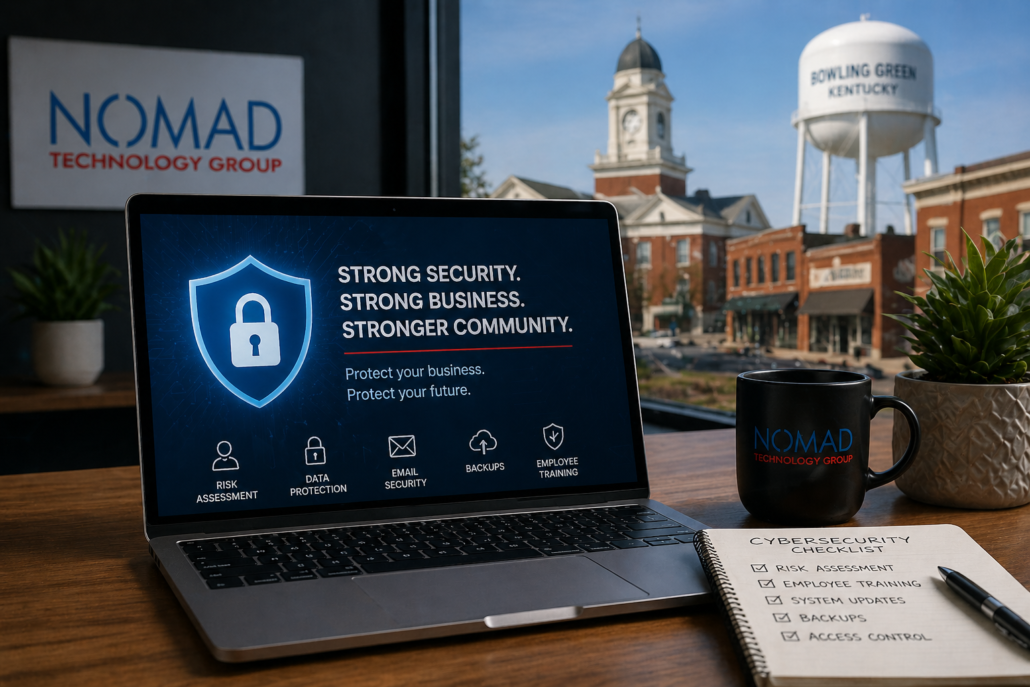
What’s the First Cybersecurity Step for Small Businesses in Western Kentucky?
Key Phrase: What’s the First Cybersecurity Step for Small Businesses in Western Kentucky
When asking what’s the first cybersecurity step for small businesses in Western Kentucky, the answer begins with understanding your company’s risks. Small businesses throughout Western Kentucky face growing cyber threats, including phishing scams, ransomware, and credential theft. However, many local business owners assume cybercriminals only target large corporations. In reality, smaller companies are often targeted because they may have fewer cybersecurity protections in place. Therefore, taking the first cybersecurity step early can help reduce risk and protect sensitive business information.
Why Cybersecurity Matters for Small Businesses in Western Kentucky
Small businesses rely heavily on technology for daily operations, customer communication, payment processing, and file storage. Consequently, even a minor cyberattack can interrupt operations and lead to financial losses.
Additionally, businesses across Western Kentucky often store customer data, employee records, and payment information. Because of this, hackers frequently target organizations that may not have strong cybersecurity measures.
According to the U.S. Cybersecurity & Infrastructure Security Agency (CISA), small businesses are common targets because they often lack dedicated IT security teams and formal cybersecurity policies.
The First Cybersecurity Step: Conduct a Risk Assessment
The best answer to what’s the first cybersecurity step for small businesses in Western Kentucky is conducting a cybersecurity risk assessment.
A risk assessment helps identify vulnerabilities before cybercriminals exploit them. More importantly, it allows businesses to understand where they are most exposed.
A cybersecurity risk assessment can reveal:
- Weak passwords or poor login practices
- Outdated software and operating systems
- Employee cybersecurity gaps
- Vulnerable email systems
- Unsecured business Wi-Fi networks
- Sensitive data storage risks
As a result, businesses can prioritize improvements instead of guessing where to begin.
Why a Risk Assessment Should Come First
Many business owners purchase antivirus software or firewalls immediately. Although these tools are important, they may not address the biggest risks first.
For example, if employees frequently click phishing emails, antivirus software alone may not stop account compromise. Therefore, identifying weaknesses early allows businesses to focus on the most effective protections.
Furthermore, a risk assessment creates a roadmap for long-term cybersecurity planning.
Common Cybersecurity Risks for Western Kentucky Businesses
When evaluating what’s the first cybersecurity step for small businesses in Western Kentucky, it also helps to understand the threats local businesses commonly face.
Phishing Emails
Phishing remains one of the most common attacks targeting small businesses. These emails appear legitimate but are designed to steal login credentials or install malware.
Weak Passwords
Many businesses still use shared passwords or simple login credentials. Unfortunately, weak passwords make it easier for hackers to access systems.
Outdated Software
Unpatched software vulnerabilities are often exploited by cybercriminals. Consequently, failing to install updates can increase exposure.
Lack of Employee Training
Employees are often the first line of defense. However, without cybersecurity awareness training, they may unknowingly create risks.
Steps to Take After a Risk Assessment
After completing a cybersecurity assessment, businesses can begin implementing stronger protections.
1. Enable Multi-Factor Authentication (MFA)
MFA adds another layer of security beyond passwords. Therefore, even if credentials are compromised, unauthorized access becomes more difficult.
2. Train Employees Regularly
Cybersecurity awareness training helps employees recognize suspicious emails, fake websites, and social engineering attempts.
3. Keep Systems Updated
Regular software updates often include critical security patches. As a result, updating systems reduces vulnerabilities.
4. Back Up Business Data
Reliable backups help businesses recover from ransomware attacks or accidental data loss.
5. Secure Business Networks
Encrypted Wi-Fi, strong passwords, and limited access permissions reduce unauthorized entry points.
Why Western Kentucky Businesses Should Act Early
Cybersecurity is no longer optional for small businesses. In fact, delaying action may increase both operational and financial risks.
When businesses understand what’s the first cybersecurity step for small businesses in Western Kentucky, they can build a stronger foundation for protecting customer data and business continuity.
Moreover, early action helps reduce downtime, improve trust, and strengthen long-term resilience.
Final Thoughts
The answer to what’s the first cybersecurity step for small businesses in Western Kentucky is simple: begin with a cybersecurity risk assessment. Rather than waiting until a cyberattack occurs, businesses should proactively identify vulnerabilities.
Because cyber threats continue to evolve, small businesses must remain vigilant. Additionally, taking preventive action today can help avoid costly disruptions tomorrow.
Source
The Cybersecurity and Infrastructure Security Agency recommends that small businesses identify risks and implement layered security practices to reduce cyber threats.
Learn more here:
https://www.cisa.gov/resources-tools/resources/small-business-cybersecurity-cornerstones