What’s the First Cybersecurity Step for Small Businesses in Evansville and Southern Indiana?
Biggest Fears Businesses Have About AI: What Companies Need to Know
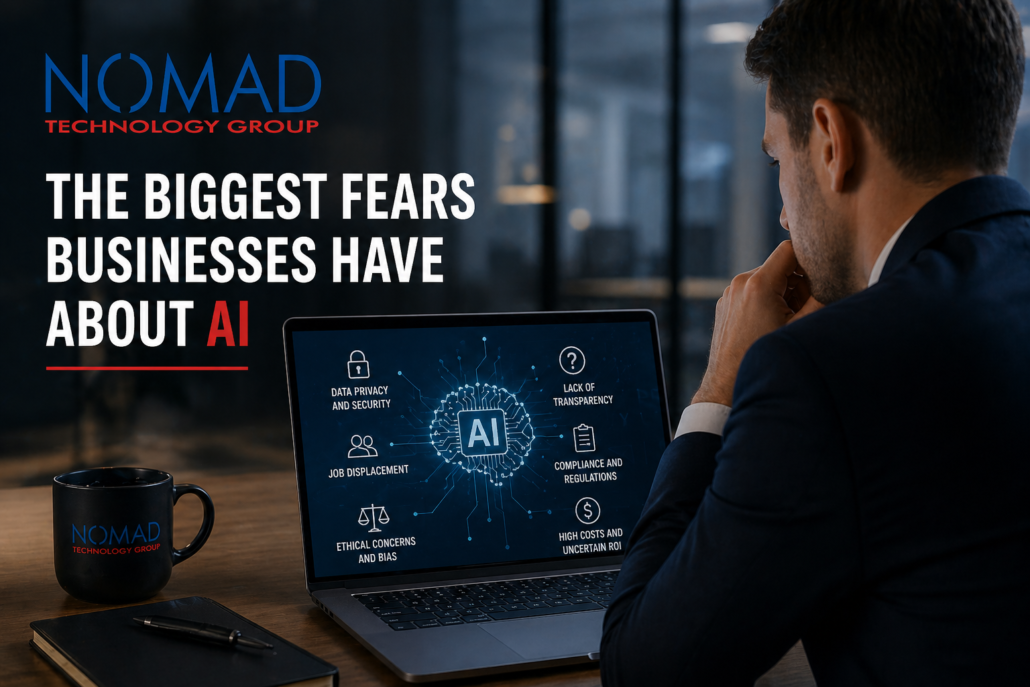
The biggest fears businesses have about AI continue to shape how companies adopt artificial intelligence in the workplace. While AI offers efficiency, automation, and improved decision-making, many organizations remain cautious. In fact, businesses often worry about data privacy, job displacement, cybersecurity risks, and the reliability of AI-generated results. Therefore, understanding these concerns can help companies adopt AI responsibly while reducing uncertainty.
Why Businesses Are Concerned About AI
Artificial intelligence has quickly become a major part of modern business operations. Companies use AI for customer service, marketing, analytics, cybersecurity, and automation. However, rapid adoption has created uncertainty.
Additionally, businesses may struggle to understand how AI systems work or how much control they retain over the technology. Because of this, decision-makers often hesitate before integrating AI into critical business processes.
According to a survey conducted by PwC, business leaders cite trust, transparency, and cybersecurity as major concerns when implementing AI solutions.
1. Data Privacy and Security Risks
One of the biggest fears businesses have about AI involves data privacy and cybersecurity.
AI systems often require large amounts of data to function effectively. Consequently, companies worry about how sensitive customer information is stored, processed, and protected.
If AI tools are not configured correctly, businesses may face:
- Unauthorized access to confidential information
- Data leaks or accidental exposure
- Compliance violations
- Increased cyberattack risks
Furthermore, businesses operating in regulated industries such as healthcare, finance, and legal services may face additional concerns about protecting private information.
2. Loss of Human Jobs
Another of the biggest fears businesses have about AI is workforce disruption.
Many employees worry that AI will replace human roles, particularly in administrative, customer service, and repetitive-task positions. While AI can automate certain responsibilities, businesses often fear employee resistance and morale issues.
However, AI does not always eliminate jobs. Instead, many companies use AI to improve efficiency while allowing employees to focus on higher-value work.
For example, AI may automate data entry while staff members concentrate on customer relationships or strategic planning.
3. Lack of Trust in AI Decisions
Businesses often hesitate to trust AI-generated recommendations.
AI systems may analyze data and provide suggestions, yet decision-makers sometimes question how those conclusions are reached. Therefore, transparency becomes critical.
This concern is especially important in industries where decisions impact customers directly, including:
- Healthcare
- Financial services
- Insurance
- Legal services
- Human resources
Because AI algorithms can be complex, some organizations fear relying on systems they do not fully understand.
4. Cybersecurity Threats and AI Misuse
AI can strengthen cybersecurity defenses. However, cybercriminals also use AI to launch more advanced attacks.
As a result, businesses fear that AI may increase cyber risks rather than reduce them.
Examples include:
- AI-generated phishing emails
- Automated hacking attempts
- Deepfake impersonation scams
- Faster malware development
Consequently, organizations must balance AI adoption with strong cybersecurity strategies.
5. Compliance and Legal Concerns
Legal uncertainty is another major concern.
Many businesses worry about how AI use aligns with privacy laws, data regulations, and industry-specific compliance requirements. Furthermore, regulations around AI continue to evolve.
Companies may fear:
- Violating privacy regulations
- Misusing customer data
- Producing biased outcomes
- Facing legal liability for AI decisions
Therefore, organizations should carefully evaluate how AI tools collect and process information.
How Businesses Can Reduce AI Concerns
Although the biggest fears businesses have about AI are valid, companies can reduce risks with proper planning.
1. Create Clear AI Policies
Businesses should define how AI tools are used internally. Clear guidelines help employees understand acceptable use.
2. Protect Sensitive Data
Implementing strong cybersecurity practices ensures AI systems operate securely.
3. Train Employees
Employee education helps teams understand both the benefits and limitations of AI.
4. Use Trusted AI Platforms
Choosing reputable AI vendors reduces security and compliance risks.
5. Maintain Human Oversight
AI should support decision-making rather than replace human judgment entirely.
Final Thoughts
The biggest fears businesses have about AI often revolve around security, trust, compliance, and workforce changes. However, businesses that approach AI strategically can benefit from automation and innovation while minimizing risk.
Moreover, understanding these concerns allows organizations to create safer and more effective AI adoption strategies. As AI continues to evolve, companies that stay informed will be better positioned to use technology responsibly.
Source
According to PwC’s Global Artificial Intelligence Study, businesses continue to identify trust, cybersecurity, and workforce impact as primary concerns when adopting AI.
Learn more here:
https://www.pwc.com/gx/en/issues/data-and-analytics/artificial-intelligence/what-is-ai.html