How Do I Know If My Business Is at Risk for a Cyberattack? | Southern Indiana Cybersecurity Guide
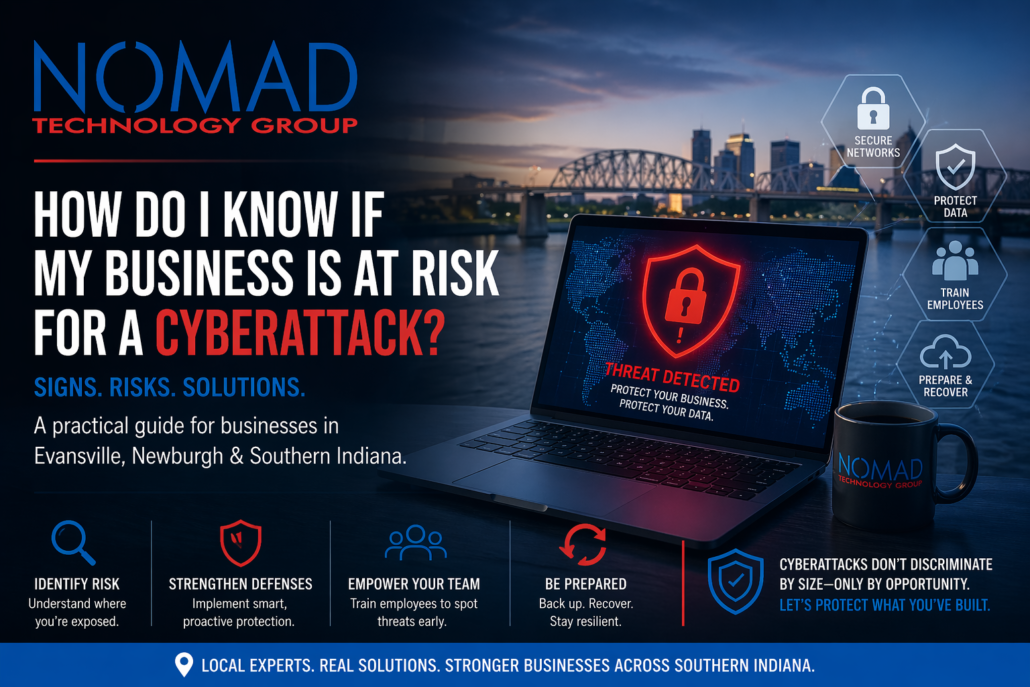
How Do I Know If My Business Is at Risk for a Cyberattack?
Cyberattacks are no longer just a problem for large corporations. Today, small and mid-sized businesses are among the most common targets for hackers. Businesses across Southern Indiana, including Evansville, Newburgh, and surrounding communities, face growing cybersecurity threats every day.
If you are asking, “How do I know if my business is at risk for a cyberattack?” the honest answer is that most businesses have some level of exposure. The real concern is understanding how vulnerable your company is and identifying weaknesses before cybercriminals exploit them.
This guide explains the most common cybersecurity risks for small businesses, warning signs that your company may be vulnerable, and how to improve your protection.
Why Small Businesses Are at High Risk for Cyberattacks
Many business owners assume hackers only target large companies. In reality, small businesses are often easier targets because they typically have fewer security protections in place.
Cybercriminals frequently target smaller organizations because:
- Security systems may be outdated or inconsistently maintained
- Employees often lack cybersecurity awareness training
- Sensitive business data may not be properly secured
- IT management may be outsourced without proactive monitoring
- Limited budgets often result in weak cybersecurity infrastructure
Hackers know that small businesses often store valuable customer information, payment data, employee records, and proprietary business information.
Without strong cybersecurity measures, even a single phishing email or ransomware attack can cause serious downtime, financial loss, and reputational damage.
Warning Signs Your Business May Be Vulnerable to a Cyberattack
If your organization experiences any of the following issues, your business may already be at increased cybersecurity risk.
1. You Do Not Have a Formal Cybersecurity Plan
A cybersecurity plan helps your business respond quickly to threats and outlines how systems, employees, and sensitive information should be protected.
If your business lacks:
- Documented cybersecurity policies
- Employee security procedures
- Incident response planning
- Access control guidelines
You may be operating reactively instead of proactively.
2. Your Software or Hardware Is Outdated
Old operating systems, unsupported devices, and missing software updates create easy entry points for cybercriminals.
Attackers actively search for businesses running outdated technology because known vulnerabilities are easier to exploit.
Common warning signs include:
- Delayed software updates
- Unsupported operating systems
- Aging firewalls or networking equipment
- Applications that no longer receive security patches
3. Weak Password Policies Are Common
Weak password management remains one of the leading causes of cyber breaches.
Your business may be vulnerable if employees:
- Reuse passwords across multiple platforms
- Share login credentials
- Use simple or predictable passwords
- Lack multi-factor authentication (MFA)
Strong password security combined with MFA significantly reduces risk.
4. Data Backups Are Limited or Untested
Many businesses assume they are protected because backups exist. However, if backups are not tested regularly, they may fail when needed most.
A strong backup strategy should include:
- Automatic scheduled backups
- Offsite or cloud backup storage
- Regular restoration testing
- Disaster recovery planning
Backups are critical for recovering from ransomware attacks and unexpected system failures.
5. Employees Lack Cybersecurity Awareness Training
Employees are often the first line of defense against cyber threats.
Phishing emails, malicious links, and social engineering attacks remain among the most common entry points for hackers.
If your staff has never received cybersecurity training, your business may be exposed to avoidable risks.
Common Cyber Threats Affecting Businesses in Southern Indiana
Businesses throughout Evansville, Newburgh, and Southern Indiana face increasing cyber risks.
Regional businesses are attractive targets because attackers often assume smaller organizations have weaker security controls.
Common cyber threats include:
- Phishing emails impersonating executives, vendors, or customers
- Ransomware attacks that lock business systems and data
- Business Email Compromise (BEC) scams
- Credential theft through weak passwords
- Malware hidden in downloads or attachments
- Data breaches involving customer or employee information
Industries frequently targeted include:
- Healthcare
- Manufacturing
- Construction
- Retail
- Financial services
- Professional services
No matter your industry, your business data holds value to cybercriminals.
Cybersecurity Risk Self-Assessment for Small Businesses
Use this checklist to evaluate whether your business may be vulnerable to a cyberattack.
Ask yourself:
- Do we regularly install software updates and security patches?
- Are employee accounts protected with multi-factor authentication?
- Do we routinely test our data backups?
- Have employees received phishing awareness training?
- Do we have a cybersecurity incident response plan?
- Are vendors and third-party tools evaluated for security risks?
- Is antivirus and endpoint protection actively monitored?
- Do we limit employee access to sensitive systems?
If you answered “no” or “unsure” to multiple questions, your business may have cybersecurity gaps that should be addressed.
How do I know if my business is at risk for a cyberattack?
How Nomad Technology Group Helps Businesses Reduce Cyber Risk
At Nomad Technology Group, we help businesses across Evansville, Newburgh, and Southern Indiana strengthen their cybersecurity posture with proactive protection.
Our cybersecurity services include:
- Managed cybersecurity monitoring
- Threat detection and prevention
- Network vulnerability assessments
- Firewall configuration and security management
- Employee cybersecurity awareness training
- Secure cloud backups and disaster recovery
- Endpoint protection and device security
- Compliance support for industry regulations
We focus on practical cybersecurity strategies that improve protection without disrupting daily business operations.
How do I know if my business is at risk for a cyberattack?
Why Proactive Cybersecurity Matters
Many businesses only invest in cybersecurity after an incident occurs.
Unfortunately, the cost of a cyberattack can be severe and may include:
- Business downtime
- Data loss
- Lost customer trust
- Financial penalties
- Recovery expenses
- Legal liability
Cybersecurity is no longer optional. A proactive risk assessment helps identify vulnerabilities before attackers exploit them.
Protect Your Business Before a Cyberattack Happens
If your business operates in Evansville, Newburgh, or anywhere in Southern Indiana, now is the time to evaluate your cybersecurity readiness.
Understanding your cybersecurity risk is the first step toward protecting your business, employees, and customers.
Nomad Technology Group can help you identify vulnerabilities, strengthen defenses, and build a safer digital environment.
Do not wait until after a breach to take cybersecurity seriously. Protect your business today.
Protect your business. Secure your data. Stay ahead of Cyber Threats.

