Tag Archive for: managed services

What’s the First Cybersecurity Step for Small Businesses in Evansville and Southern Indiana?

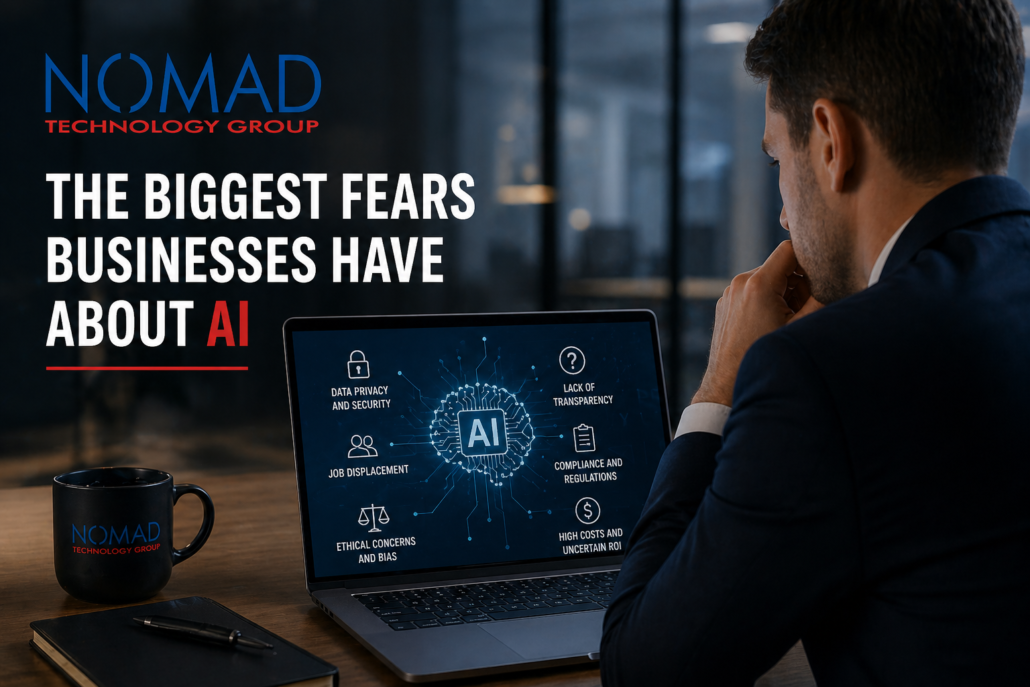
Biggest Fears Businesses Have About AI: What Companies Need to Know


The biggest fears businesses have about AI continue to shape how companies adopt artificial intelligence in the workplace. While AI offers efficiency, automation, and improved decision-making, many organizations remain cautious. In fact, businesses often worry about data privacy, job displacement, cybersecurity risks, and the reliability of AI-generated results. Therefore, understanding these concerns can help companies adopt AI responsibly while reducing uncertainty.

Why Businesses Are Concerned About AI

Artificial intelligence has quickly become a major part of modern business operations. Companies use AI for customer service, marketing, analytics, cybersecurity, and automation. However, rapid adoption has created uncertainty.

Additionally, businesses may struggle to understand how AI systems work or how much control they retain over the technology. Because of this, decision-makers often hesitate before integrating AI into critical business processes.

According to a survey conducted by PwC, business leaders cite trust, transparency, and cybersecurity as major concerns when implementing AI solutions.

1. Data Privacy and Security Risks

One of the biggest fears businesses have about AI involves data privacy and cybersecurity.

AI systems often require large amounts of data to function effectively. Consequently, companies worry about how sensitive customer information is stored, processed, and protected.

If AI tools are not configured correctly, businesses may face:

  • Unauthorized access to confidential information
  • Data leaks or accidental exposure
  • Compliance violations
  • Increased cyberattack risks

Furthermore, businesses operating in regulated industries such as healthcare, finance, and legal services may face additional concerns about protecting private information.

2. Loss of Human Jobs

Another of the biggest fears businesses have about AI is workforce disruption.

Many employees worry that AI will replace human roles, particularly in administrative, customer service, and repetitive-task positions. While AI can automate certain responsibilities, businesses often fear employee resistance and morale issues.

However, AI does not always eliminate jobs. Instead, many companies use AI to improve efficiency while allowing employees to focus on higher-value work.

For example, AI may automate data entry while staff members concentrate on customer relationships or strategic planning.

3. Lack of Trust in AI Decisions

Businesses often hesitate to trust AI-generated recommendations.

AI systems may analyze data and provide suggestions, yet decision-makers sometimes question how those conclusions are reached. Therefore, transparency becomes critical.

This concern is especially important in industries where decisions impact customers directly, including:

  • Healthcare
  • Financial services
  • Insurance
  • Legal services
  • Human resources

Because AI algorithms can be complex, some organizations fear relying on systems they do not fully understand.

4. Cybersecurity Threats and AI Misuse

AI can strengthen cybersecurity defenses. However, cybercriminals also use AI to launch more advanced attacks.

As a result, businesses fear that AI may increase cyber risks rather than reduce them.

Examples include:

  • AI-generated phishing emails
  • Automated hacking attempts
  • Deepfake impersonation scams
  • Faster malware development

Consequently, organizations must balance AI adoption with strong cybersecurity strategies.

5. Compliance and Legal Concerns

Legal uncertainty is another major concern.

Many businesses worry about how AI use aligns with privacy laws, data regulations, and industry-specific compliance requirements. Furthermore, regulations around AI continue to evolve.

Companies may fear:

  • Violating privacy regulations
  • Misusing customer data
  • Producing biased outcomes
  • Facing legal liability for AI decisions

Therefore, organizations should carefully evaluate how AI tools collect and process information.

How Businesses Can Reduce AI Concerns

Although the biggest fears businesses have about AI are valid, companies can reduce risks with proper planning.

1. Create Clear AI Policies

Businesses should define how AI tools are used internally. Clear guidelines help employees understand acceptable use.

2. Protect Sensitive Data

Implementing strong cybersecurity practices ensures AI systems operate securely.

3. Train Employees

Employee education helps teams understand both the benefits and limitations of AI.

4. Use Trusted AI Platforms

Choosing reputable AI vendors reduces security and compliance risks.

5. Maintain Human Oversight

AI should support decision-making rather than replace human judgment entirely.

Final Thoughts

The biggest fears businesses have about AI often revolve around security, trust, compliance, and workforce changes. However, businesses that approach AI strategically can benefit from automation and innovation while minimizing risk.

Moreover, understanding these concerns allows organizations to create safer and more effective AI adoption strategies. As AI continues to evolve, companies that stay informed will be better positioned to use technology responsibly.

Source

According to PwC’s Global Artificial Intelligence Study, businesses continue to identify trust, cybersecurity, and workforce impact as primary concerns when adopting AI.

Learn more here:
https://www.pwc.com/gx/en/issues/data-and-analytics/artificial-intelligence/what-is-ai.html


What’s the First Cybersecurity Step for Small Businesses in Evansville and Southern Indiana?

What’s the First Cybersecurity Step for Small Businesses in Western Kentucky?

Key Phrase: What’s the First Cybersecurity Step for Small Businesses in Western Kentucky

When asking what’s the first cybersecurity step for small businesses in Western Kentucky, the answer begins with understanding your company’s risks. Small businesses throughout Western Kentucky face growing cyber threats, including phishing scams, ransomware, and credential theft. However, many local business owners assume cybercriminals only target large corporations. In reality, smaller companies are often targeted because they may have fewer cybersecurity protections in place. Therefore, taking the first cybersecurity step early can help reduce risk and protect sensitive business information.

Why Cybersecurity Matters for Small Businesses in Western Kentucky

Small businesses rely heavily on technology for daily operations, customer communication, payment processing, and file storage. Consequently, even a minor cyberattack can interrupt operations and lead to financial losses.

Additionally, businesses across Western Kentucky often store customer data, employee records, and payment information. Because of this, hackers frequently target organizations that may not have strong cybersecurity measures.

According to the U.S. Cybersecurity & Infrastructure Security Agency (CISA), small businesses are common targets because they often lack dedicated IT security teams and formal cybersecurity policies.

The First Cybersecurity Step: Conduct a Risk Assessment

The best answer to what’s the first cybersecurity step for small businesses in Western Kentucky is conducting a cybersecurity risk assessment.

A risk assessment helps identify vulnerabilities before cybercriminals exploit them. More importantly, it allows businesses to understand where they are most exposed.

A cybersecurity risk assessment can reveal:

  • Weak passwords or poor login practices
  • Outdated software and operating systems
  • Employee cybersecurity gaps
  • Vulnerable email systems
  • Unsecured business Wi-Fi networks
  • Sensitive data storage risks

As a result, businesses can prioritize improvements instead of guessing where to begin.

Why a Risk Assessment Should Come First

Many business owners purchase antivirus software or firewalls immediately. Although these tools are important, they may not address the biggest risks first.

For example, if employees frequently click phishing emails, antivirus software alone may not stop account compromise. Therefore, identifying weaknesses early allows businesses to focus on the most effective protections.

Furthermore, a risk assessment creates a roadmap for long-term cybersecurity planning.

Common Cybersecurity Risks for Western Kentucky Businesses

When evaluating what’s the first cybersecurity step for small businesses in Western Kentucky, it also helps to understand the threats local businesses commonly face.

Phishing Emails

Phishing remains one of the most common attacks targeting small businesses. These emails appear legitimate but are designed to steal login credentials or install malware.

Weak Passwords

Many businesses still use shared passwords or simple login credentials. Unfortunately, weak passwords make it easier for hackers to access systems.

Outdated Software

Unpatched software vulnerabilities are often exploited by cybercriminals. Consequently, failing to install updates can increase exposure.

Lack of Employee Training

Employees are often the first line of defense. However, without cybersecurity awareness training, they may unknowingly create risks.

Steps to Take After a Risk Assessment

After completing a cybersecurity assessment, businesses can begin implementing stronger protections.

1. Enable Multi-Factor Authentication (MFA)

MFA adds another layer of security beyond passwords. Therefore, even if credentials are compromised, unauthorized access becomes more difficult.

2. Train Employees Regularly

Cybersecurity awareness training helps employees recognize suspicious emails, fake websites, and social engineering attempts.

3. Keep Systems Updated

Regular software updates often include critical security patches. As a result, updating systems reduces vulnerabilities.

4. Back Up Business Data

Reliable backups help businesses recover from ransomware attacks or accidental data loss.

5. Secure Business Networks

Encrypted Wi-Fi, strong passwords, and limited access permissions reduce unauthorized entry points.

Why Western Kentucky Businesses Should Act Early

Cybersecurity is no longer optional for small businesses. In fact, delaying action may increase both operational and financial risks.

When businesses understand what’s the first cybersecurity step for small businesses in Western Kentucky, they can build a stronger foundation for protecting customer data and business continuity.

Moreover, early action helps reduce downtime, improve trust, and strengthen long-term resilience.

Final Thoughts

The answer to what’s the first cybersecurity step for small businesses in Western Kentucky is simple: begin with a cybersecurity risk assessment. Rather than waiting until a cyberattack occurs, businesses should proactively identify vulnerabilities.

Because cyber threats continue to evolve, small businesses must remain vigilant. Additionally, taking preventive action today can help avoid costly disruptions tomorrow.

Source

The Cybersecurity and Infrastructure Security Agency recommends that small businesses identify risks and implement layered security practices to reduce cyber threats.

Learn more here:
https://www.cisa.gov/resources-tools/resources/small-business-cybersecurity-cornerstones

What’s the First Cybersecurity Step for Small Businesses in Evansville and Southern Indiana?

What’s the First Cybersecurity Step for Small Businesses in Evansville and Southern Indiana?

When asking what’s the first cybersecurity step for small businesses in Evansville and Southern Indiana, the answer often starts with understanding your risks. Small businesses across Evansville and the broader Southern Indiana region face increasing cyber threats, including phishing scams, ransomware, and credential theft. However, many local companies assume they are too small to become targets. In reality, cybercriminals frequently target small businesses because they often lack advanced security protections. Therefore, taking the first cybersecurity step early can help reduce risk and protect sensitive business information.

Why Cybersecurity Matters for Small Businesses

Small businesses rely heavily on technology for communication, customer management, payments, and day-to-day operations. Consequently, even a minor cyberattack can disrupt operations and create financial losses.

Additionally, businesses in industries such as healthcare, retail, legal services, and construction often store valuable customer information. Because of this, hackers may see smaller organizations as easier entry points.

According to the U.S. Cybersecurity & Infrastructure Security Agency (CISA), small businesses are frequent targets due to limited cybersecurity resources and inconsistent security policies.

The First Cybersecurity Step: Conduct a Risk Assessment

The best answer to what’s the first cybersecurity step for small businesses in Evansville and Southern Indiana is conducting a cybersecurity risk assessment.

A risk assessment helps identify:

  • Weak passwords or poor login practices
  • Outdated software and operating systems
  • Employee cybersecurity gaps
  • Vulnerable email systems
  • Unsecured business networks
  • Sensitive data storage risks

Most importantly, a risk assessment provides a clear picture of where your business is vulnerable. As a result, you can prioritize security improvements instead of guessing where to begin.

Why a Risk Assessment Should Come First

Many businesses immediately purchase antivirus software or firewalls. Although these tools are important, they may not solve the biggest problems first.

For example, if employees are unknowingly clicking phishing links, antivirus software alone may not prevent account compromise. Therefore, understanding your specific risks allows you to invest in the right protections.

Furthermore, businesses that assess vulnerabilities early can often prevent costly downtime and data breaches.

Common Cybersecurity Risks for Southern Indiana Businesses

When evaluating what’s the first cybersecurity step for small businesses in Evansville and Southern Indiana, it helps to understand common local risks.

Phishing Emails

Phishing attacks remain one of the most common threats targeting small businesses. These emails appear legitimate but are designed to steal credentials or install malware.

Weak Passwords

Many businesses still rely on simple passwords or shared login credentials. Unfortunately, weak passwords make it easier for attackers to gain access.

Unpatched Software

Outdated software often contains vulnerabilities that cybercriminals actively exploit. Consequently, failing to update systems can increase risk.

Lack of Employee Training

Employees are often the first line of defense. However, without proper awareness training, they may unknowingly create security risks.

Steps to Take After a Risk Assessment

Once a risk assessment is complete, businesses can begin improving security in practical ways.

1. Enable Multi-Factor Authentication (MFA)

MFA adds an extra layer of protection beyond passwords. Therefore, even if credentials are stolen, attackers may still be blocked.

2. Train Employees Regularly

Cybersecurity awareness training helps staff recognize suspicious emails, fake websites, and social engineering attempts.

3. Keep Systems Updated

Software updates often include important security patches. As a result, regular updates reduce vulnerabilities.

4. Back Up Business Data

Reliable backups help businesses recover quickly after ransomware or accidental data loss.

5. Secure Business Wi-Fi Networks

Encrypted Wi-Fi and secure passwords reduce unauthorized access.

Why Local Businesses Should Act Early

Cybersecurity is no longer optional for small businesses. In fact, delaying security improvements may increase both financial and operational risks.

When businesses understand what’s the first cybersecurity step for small businesses in Evansville and Southern Indiana, they can build a stronger security foundation. Moreover, starting with a risk assessment creates a roadmap for long-term protection.

Final Thoughts

The answer to what’s the first cybersecurity step for small businesses in Evansville and Southern Indiana is simple: begin with a cybersecurity risk assessment. Rather than reacting after an attack, businesses should proactively identify vulnerabilities before problems occur.

Because cyber threats continue to evolve, small businesses must remain vigilant. Additionally, taking early action helps protect customer trust, business continuity, and company reputation.

Source

The Cybersecurity and Infrastructure Security Agency recommends that small businesses identify risks and implement layered security measures to reduce cyber threats.

Learn more here:
https://www.cisa.gov/resources-tools/resources/small-business-cybersecurity-cornerstones

Most Common Cyberattacks in Nashville Businesses: What Local Companies Need to Know

Most Common Cyberattacks in Nashville Businesses: What Local Companies Need to Know

Key Phrase: Most Common Cyberattacks in Nashville Businesses

The most common cyberattacks in Nashville businesses continue to evolve as cybercriminals target organizations of all sizes across Middle Tennessee. Whether you run a healthcare office, construction company, law firm, or retail operation, understanding the risks is essential. Nashville’s growing business ecosystem makes it an attractive target for hackers seeking financial gain, sensitive data, and operational disruption. Therefore, businesses must remain proactive in identifying vulnerabilities and strengthening cybersecurity defenses.

Why Cybercrime Is Increasing in Nashville

Nashville has become one of the fastest-growing business hubs in the Southeast. As a result, local companies often store large volumes of customer information, payment data, and intellectual property. Unfortunately, cybercriminals view these assets as opportunities.

Additionally, hybrid work environments and cloud-based systems have increased exposure to cyber threats. Many businesses rely on email communication, shared networks, and third-party applications, which can create multiple entry points for attackers.

1. Phishing Attacks

Phishing remains one of the most common cyberattacks in Nashville businesses because it targets employees directly. Attackers send deceptive emails that appear legitimate to trick users into clicking malicious links or sharing login credentials.

For example, a phishing email may impersonate a vendor, bank, or company executive. Once an employee interacts with the message, hackers can gain access to company accounts or deploy malware.

Common signs of phishing include:

  • Urgent requests for payment or sensitive data
  • Suspicious links or attachments
  • Misspelled domain names
  • Emails requesting password verification

Because phishing relies on human error, employee cybersecurity awareness training is essential.

2. Ransomware Attacks

Ransomware attacks continue to impact organizations nationwide, including businesses throughout the Nashville area. In a ransomware attack, hackers encrypt files and demand payment to restore access.

These attacks often begin through phishing emails, vulnerable software, or compromised credentials. Consequently, businesses may experience downtime, financial loss, and reputational damage.

Industries frequently targeted include:

  • Healthcare providers
  • Legal firms
  • Financial institutions
  • Manufacturing companies
  • Small and midsize businesses

According to cybersecurity reporting, ransomware commonly spreads through phishing campaigns and unpatched vulnerabilities. (pcmatic.com)

3. Business Email Compromise (BEC)

Business Email Compromise, often called BEC, is another of the most common cyberattacks in Nashville businesses. This attack occurs when cybercriminals impersonate executives, vendors, or trusted contacts to trick employees into transferring funds or revealing confidential information.

Unlike traditional phishing, BEC attacks are highly targeted and often appear convincing. Hackers may research a company’s structure before launching the scam.

The FBI has warned that BEC schemes have caused billions in global losses and continue to target organizations in all industries. (Federal Bureau of Investigation)

Common BEC Scenarios

  • Fake invoice payment requests
  • Payroll diversion scams
  • Executive impersonation emails
  • Vendor account changes

As a result, businesses should implement multi-step approval processes for wire transfers and payment requests.

4. Credential Theft and Account Takeover

Credential theft occurs when attackers steal usernames and passwords through phishing, malware, or data breaches. Once they gain access, cybercriminals can infiltrate email systems, payroll software, and customer databases.

Furthermore, account takeover attacks can go undetected for weeks. During that time, hackers may monitor communications, steal data, or launch additional attacks internally.

Recent FBI reporting shows increasing financial losses tied to account takeover schemes targeting businesses and organizations. (TechRadar)

5. Supply Chain and Third-Party Attacks

Many Nashville businesses depend on vendors, managed service providers, and cloud software. Unfortunately, attackers often target smaller third-party vendors to gain access to larger organizations.

Supply chain attacks happen when hackers compromise a trusted vendor or software provider. Once compromised, malware or unauthorized access spreads to connected businesses.

Therefore, companies should carefully vet vendor cybersecurity standards and regularly review third-party access permissions.

How Nashville Businesses Can Reduce Cyber Risk

Protecting against the most common cyberattacks in Nashville businesses requires a layered cybersecurity approach. While no defense is perfect, several best practices can significantly reduce risk.

Recommended Security Measures

  • Conduct employee cybersecurity awareness training
  • Enable multi-factor authentication (MFA)
  • Regularly patch software and systems
  • Back up critical business data
  • Use endpoint detection and monitoring tools
  • Limit administrative account access
  • Implement email filtering and spam protection

Additionally, businesses should develop an incident response plan to reduce downtime if an attack occurs.

Final Thoughts

The most common cyberattacks in Nashville businesses are not limited to large corporations. In fact, small and midsize companies are often targeted because they may lack advanced cybersecurity protections.

By understanding threats like phishing, ransomware, business email compromise, credential theft, and supply chain attacks, Nashville businesses can take proactive steps to reduce exposure. Moreover, investing in cybersecurity today helps prevent costly disruptions tomorrow.

Source

Federal Bureau of Investigation – Business Email Compromise:
FBI Business Email Compromise Resource

Indianapolis and Central Indiana Businesses Targeted by Cyber Criminals | Cybersecurity Guide


Indianapolis and Central Indiana Businesses Are Being Targeted by Cyber Criminals

Indianapolis business cybersecurity

Businesses across Indianapolis and Central Indiana are facing a growing cybersecurity threat.

From ransomware attacks to phishing scams and data breaches, cyber criminals are increasingly targeting small and mid-sized businesses throughout Marion County, Hamilton County, Hendricks County, Johnson County, Boone County, Hancock County, and surrounding communities.

Many business owners believe cybercriminals only target large corporations.

The reality is different.

Small and mid-sized businesses are often easier targets because they may lack advanced cybersecurity defenses, employee training, or proactive IT monitoring.

If your company operates in Indianapolis, Carmel, Fishers, Greenwood, Noblesville, Plainfield, Avon, or nearby areas, cybersecurity should be a business priority.


Why Cyber Criminals Target Businesses in Indianapolis and Central Indiana

Indianapolis is one of the Midwest’s largest business hubs.

The region has a strong economy built around:

  • Healthcare organizations
  • Manufacturing companies
  • Logistics and transportation
  • Financial services
  • Professional services firms
  • Retail businesses
  • Construction and trade companies

These industries store valuable customer information, payment data, employee records, and proprietary business information.

Cybercriminals know local businesses often depend heavily on technology but may not have dedicated cybersecurity teams.

This creates an opportunity for attackers.


Central Indiana Cybersecurity Threats Are Increasing

The FBI’s Internet Crime Complaint Center (IC3) continues to report increasing cybercrime activity nationwide, with ransomware, phishing, and business email compromise among the most common attacks impacting businesses.

According to the FBI IC3 Report, cybercrime complaints and financial losses continue to rise each year, affecting organizations of all sizes.

Source: 2023_IC3Report.pdf

This growing trend impacts businesses across Indianapolis and Central Indiana.

Cybercriminals frequently target regional companies because they believe smaller organizations may have:

  • Limited cybersecurity budgets
  • Older infrastructure
  • Weak password policies
  • Insufficient employee training
  • Unpatched software vulnerabilities
  • Limited monitoring or response tools

Common Cyber Threats Facing Indianapolis Businesses

Businesses in Indianapolis and Central Indiana face multiple cybersecurity risks.

Understanding these threats is the first step toward protection.

1. Phishing Attacks

Phishing remains one of the most common attack methods.

Cybercriminals send fake emails designed to appear legitimate.

These emails often impersonate:

  • Vendors
  • Banks
  • Customers
  • Internal leadership
  • Technology providers

Employees may unknowingly click a malicious link or download harmful attachments.

2. Ransomware Attacks

Ransomware encrypts business files and demands payment to restore access.

A ransomware attack can shut down operations quickly.

Businesses in Indianapolis and Central Indiana that lack secure backups may face expensive recovery costs.

3. Business Email Compromise (BEC)

Business email compromise occurs when attackers gain access to business email accounts.

Cybercriminals may impersonate executives or vendors to request fraudulent payments.

These scams often result in large financial losses.

4. Weak Passwords and Credential Theft

Stolen credentials remain a major cybersecurity risk.

Weak passwords or reused login information make it easier for cybercriminals to access business systems.


Why Indianapolis and Central Indiana Businesses Are Attractive Targets

The key phrase “Indianapolis business cybersecurity” has become increasingly important because local organizations are facing more sophisticated threats.

Cybercriminals often view small businesses as easier entry points.

Businesses in Central Indiana may become vulnerable if they:

  • Use outdated technology
  • Lack multi-factor authentication
  • Do not monitor systems proactively
  • Have weak backup processes
  • Do not train employees on cyber awareness

Strong Indianapolis business cybersecurity strategies can significantly reduce risk.


Warning Signs Your Business May Be Vulnerable

Business owners should watch for early indicators that systems may be exposed.

Common warning signs include:

  • Frequent phishing emails reaching inboxes
  • Slow or unusual computer behavior
  • Unexpected password reset requests
  • Employees sharing login credentials
  • Lack of documented cybersecurity policies
  • Missing software updates or patches
  • No recent backup testing

Ignoring these signs may increase the likelihood of a cyberattack.


How Businesses in Central Indiana Can Reduce Cyber Risk

Proactive cybersecurity helps businesses reduce downtime, protect customer information, and improve business continuity.

Effective cybersecurity practices include:

Implement Multi-Factor Authentication

Multi-factor authentication adds another layer of protection beyond passwords.

Even if credentials are stolen, MFA helps block unauthorized access.

Train Employees Regularly

Employee awareness training reduces phishing risk.

Well-trained staff members are less likely to fall for email scams.

Keep Systems Updated

Security updates close vulnerabilities that cybercriminals actively exploit.

Regular patching is essential for strong Indianapolis business cybersecurity.

Use Secure Backup Systems

Reliable backups allow businesses to recover quickly after ransomware attacks.

Backups should be tested regularly.

Monitor Networks Proactively

Cybersecurity monitoring helps detect suspicious activity before major damage occurs.


Why Proactive IT Support Matters for Indianapolis Businesses

Many companies still rely on break-fix IT support.

Break-fix providers only respond after problems happen.

Cybersecurity requires a proactive approach.

Managed Service Providers (MSPs) continuously monitor systems and identify risks before they become serious incidents.

A proactive MSP helps businesses:

  • Prevent downtime
  • Reduce ransomware exposure
  • Improve employee security awareness
  • Maintain secure backups
  • Monitor threats 24/7
  • Respond quickly to incidents

Businesses focused on Indianapolis business cybersecurity often benefit from managed IT support rather than reactive troubleshooting. For more information, please contact us at Nomad Technology Group | PROFESSIONAL, UNLIMITED I.T. SERVICE | IN – KY – TN


How Nomad Technology Group Supports Businesses in Indianapolis and Central Indiana

Nomad Technology Group helps businesses across Indianapolis and Central Indiana improve cybersecurity readiness.

Our proactive services include:

  • Managed IT services
  • Cybersecurity monitoring
  • Endpoint security
  • Firewall management
  • Backup and disaster recovery
  • Employee cybersecurity training
  • Network assessments
  • Threat detection and response

We work with businesses to reduce risk, improve uptime, and strengthen long-term security.


Protect Your Indianapolis Business Before a Cyberattack Happens

Cyber threats continue to increase across Indianapolis and Central Indiana.

Businesses that wait until after an attack often face costly recovery and downtime.

The best defense is proactive cybersecurity.

By investing in Indianapolis business cybersecurity, companies can reduce exposure and protect their operations.

Nomad Technology Group helps local businesses build stronger defenses and stay ahead of cybercriminals.

Do not wait for a ransomware attack or data breach to impact your business. Take a proactive cybersecurity approach today.

Western Kentucky Businesses Hit by Ransomware | Why Proactive MSP Support Matters

Western Kentucky Businesses Hit by Ransomware: Why Proactive IT Support Beats Break-Fix IT Services


Western Kentucky Businesses Hit by Ransomware: Why Proactive IT Support Matters

Ransomware attacks are no longer isolated to large cities or Fortune 500 companies. Businesses throughout Western Kentucky—including Owensboro, Henderson, Madisonville, Hopkinsville, Paducah, Bowling Green, and surrounding counties—are increasingly becoming targets for cybercriminals.

For many business owners, a ransomware attack can lead to downtime, lost revenue, damaged customer trust, and expensive recovery costs.

Unfortunately, many small and mid-sized businesses still rely on outdated “break-fix” IT support models that only respond after problems occur.

The reality is simple: waiting until something breaks is no longer enough.

Today’s cyber threats require proactive monitoring, security management, and continuous protection.

That is why more businesses across Western Kentucky are moving toward Managed Service Providers (MSPs) like Nomad Technology Group.


Ransomware Is Increasing Across Western Kentucky

Western Kentucky businesses face many of the same cybersecurity threats as larger metropolitan areas.

Cybercriminals often target regional businesses because they believe smaller organizations may have:

  • Limited cybersecurity budgets
  • Smaller IT teams
  • Outdated infrastructure
  • Weak password practices
  • Limited employee cybersecurity training
  • Poor backup systems

Businesses in healthcare, manufacturing, logistics, retail, agriculture, construction, and professional services are especially attractive targets.

A ransomware attack can happen in seconds and spread quickly across networks.

Western Kentucky Orthopedics had a national news worthy breach in 2025. Learn More about it here Western Kentucky Orthopedics Data Breach Investigation


How Ransomware Typically Hits Local Businesses

Most ransomware attacks do not begin with advanced hacking.

Instead, they usually start with a simple mistake.

Common attack methods include:

  • Clicking a phishing email link
  • Opening a malicious attachment
  • Weak or stolen passwords
  • Unpatched software vulnerabilities
  • Exposed remote access systems
  • Compromised vendor credentials

Many Western Kentucky businesses discover ransomware only after employees lose access to files or systems become unusable.


What Happens When a Business Gets Hit With Ransomware?

When ransomware enters a network, it often spreads rapidly.

Within minutes, businesses may experience:

Locked Files and Systems

Critical files become encrypted and inaccessible.

This may include:

  • Accounting systems
  • Customer records
  • Shared folders
  • Business applications
  • Email systems
  • Production software

Business Downtime

Operations may stop entirely.

Businesses can lose access to:

  • Scheduling tools
  • Inventory management
  • Payroll systems
  • Communication platforms
  • Customer support systems

Downtime often results in lost revenue and delayed customer service.

Ransom Demands

Cybercriminals usually leave payment instructions demanding cryptocurrency in exchange for restoring access.

Some attackers also threaten to leak stolen business data publicly.

Financial and Reputational Damage

A ransomware attack may create:

  • Lost productivity
  • Expensive recovery costs
  • Regulatory penalties
  • Customer distrust
  • Legal exposure

For many businesses, the financial impact lasts long after systems are restored.


Why Break-Fix IT Services Fall Short

Many small businesses still rely on a break-fix IT model.

Break-fix support means an IT company only responds after a problem occurs.

This approach may seem cost-effective at first, but it creates serious cybersecurity risks.

Break-fix providers typically:

  • React to issues instead of preventing them
  • Do not monitor systems continuously
  • May not proactively install security updates
  • Often lack real-time threat detection
  • Are called only when something breaks

Cybersecurity threats do not wait for business hours.

By the time a break-fix company responds, ransomware may already have spread across your environment.


Why Managed Service Providers Offer Better Protection

Managed Service Providers (MSPs) take a proactive approach to IT and cybersecurity.

Instead of waiting for problems, MSPs continuously monitor, maintain, and secure business systems.

An MSP like Nomad Technology Group helps businesses reduce risk before attacks occur.

Benefits of Using an MSP for Cybersecurity

1. 24/7 Monitoring

MSPs actively monitor systems for suspicious behavior and unusual activity.

Threats can often be detected before they cause damage.

2. Regular Software Updates and Patching

Keeping software current closes vulnerabilities that cybercriminals exploit.

MSPs automate updates and maintain secure environments.

3. Backup and Disaster Recovery

Secure backups ensure businesses can recover quickly after ransomware attacks.

Reliable backup systems may prevent the need to pay ransom demands.

4. Cybersecurity Protection

MSPs provide:

  • Endpoint protection
  • Firewall management
  • Email filtering
  • Threat detection
  • Vulnerability scanning

5. Employee Cybersecurity Training

Human error remains one of the leading causes of ransomware infections.

Training employees to identify phishing attempts significantly reduces risk.

6. Predictable Costs

Unlike break-fix support, MSP services often include predictable monthly pricing.

This allows business owners to budget effectively while maintaining continuous protection.


Why Western Kentucky Businesses Need Proactive IT Support

Businesses in Henderson County, Daviess County, McCracken County, Christian County, Hopkins County, Webster County, Muhlenberg County, and surrounding regions increasingly rely on technology.

When systems fail, businesses may lose:

  • Revenue
  • Productivity
  • Customer confidence
  • Employee efficiency
  • Access to critical data

Proactive IT support minimizes disruption and helps businesses operate more securely.


How Nomad Technology Group Helps Western Kentucky Businesses

Nomad Technology Group provides proactive managed IT and cybersecurity services designed for small and mid-sized businesses across Western Kentucky.

We help business owners focus on running their companies while we handle technology protection.

Our services include:

  • Managed IT services
  • Cybersecurity monitoring
  • Endpoint protection
  • Ransomware prevention
  • Data backup and disaster recovery
  • Network monitoring
  • Firewall management
  • Employee cybersecurity training
  • Compliance support

We work proactively to identify weaknesses before they become costly problems.

For more information request a consult Nomad Technology Group | PROFESSIONAL, UNLIMITED I.T. SERVICE | IN – KY – TN


Prevention Is Always Less Expensive Than Recovery

Recovering from ransomware is often far more expensive than preventing it.

The businesses that recover fastest usually have:

  • Strong backups
  • Active monitoring
  • Cybersecurity training
  • Updated systems
  • A trusted MSP partner

Waiting for problems to happen can leave businesses vulnerable.

A proactive technology strategy helps reduce risk, improve uptime, and protect your business reputation.


Protect Your Western Kentucky Business Before an Attack Happens

Ransomware is no longer a distant threat.

Businesses across Western Kentucky are being targeted every day.

The good news is that proactive cybersecurity and managed IT services can dramatically reduce your exposure.

Nomad Technology Group helps businesses throughout Western Kentucky stay protected, secure, and operational. if your Western Kentucky Businesses Hit by Ransomware time will be of the essence.

Do not wait until ransomware shuts down your business. Build a proactive IT strategy today.


Five Ways Managed Services Can Improve Your Business

Outsourcing your company’s IT service solutions is an effective way to cut costs and maximize efficiency. The term ‘outsourcing’ has earned a bad rap in the industry, but for business professionals, outsourcing offers a myriad of benefits. Small, mid-size and large businesses can all operate with the same resources as massive corporate operations, without the overhead. If you are ready to unburden your business from the weight of IT systems, discover the five ways managed services can improve the overall health of your business.


  1. Managed services are tailor-made for your business

Managed services professionals design a system that works for your company, not a one-size-fits-all approach. Managed services evaluate your current system, identify your goals, get to know your business as a whole, evaluate possible security concerns, and work with you to devise the most effective IT strategy for maximum operation, growth, and future developments. A panoply of managed services are at your disposal, but you pay for only what you need.


  1. Resources are refocused on business growth

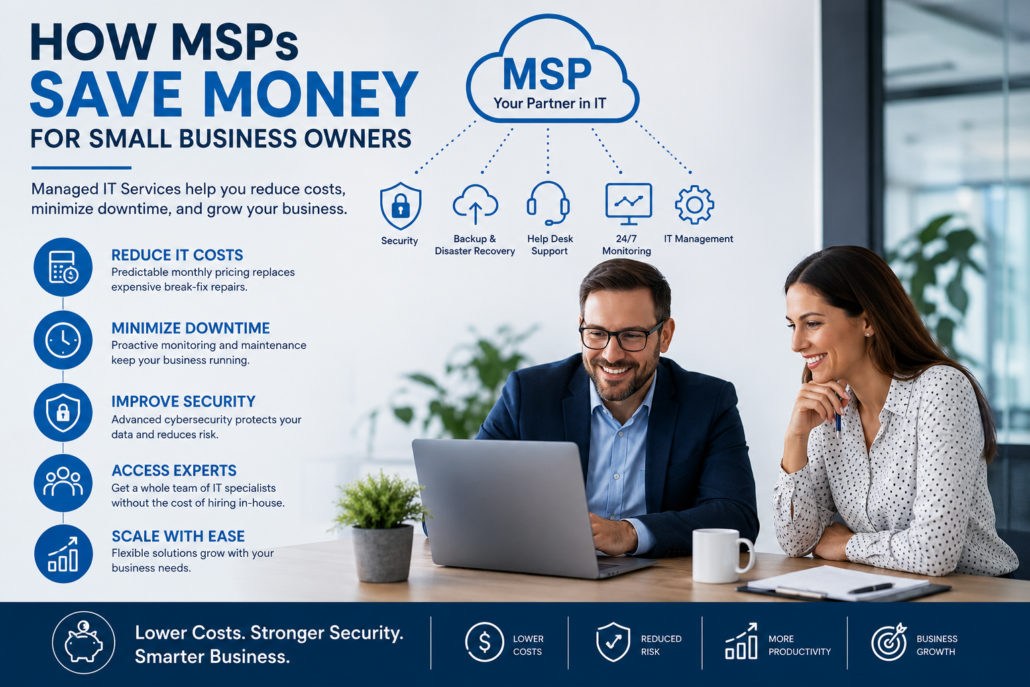
In-house IT solutions are expensive. Large companies spend thousands, even millions, of dollars on housing, training, benefits, retirements, energy use, software and maintenance. SMBs don’t have that kind of revenue, but they don’t have the expertise to handle day-to-day IT services or emergencies. Managed services is an affordable, reliable, and dependable solution. Companies that utilize managed services can refocus company revenue on resources that permit growth, such as hiring, marketing, and customer relations.


  1. Efficiency improves

When your business’s services are up and running and working at top speed, employees can work at their full potential. Downtime and slow systems can cost your company and its employees more than sanity; downtime can cost you money as well. If you want your company to stay ahead of the competition, your business needs to be delivering the best product all the time, and a slow or down system can result in poor company morale and a damaged public image. When employees, partners and clients can all work together cohesively, collaboration and communication soar, resulting in a boost in revenue and public trust.


  1. Maintenance and protection are top priority

Don’t wait until it’s broken to fix it. Companies need an effective and comprehensive system for monitoring, maintenance, and protection. Being proactive prevents major disasters, identifies security threats and gaps, and takes steps to resolve issued before they turn into larger, expensive problems that cost companies a lot of money and consumer confidence. Managed services does it all behind the scenes, identifying needs and gaps and taking steps to improve the health of the company.


  1. Costs are predictable

As a business owner you know unexpected costs can really hit your budget in the sweet spot. Where IT services are concerned, unplanned IT hiccups, security intrusions and breakdowns can cost your company a fortune. Pay-as-it-breaks solutions cost considerably more than predictable monthly fees, which include monitoring, prevention, maintenance, and updating to prevent emergencies from occurring.